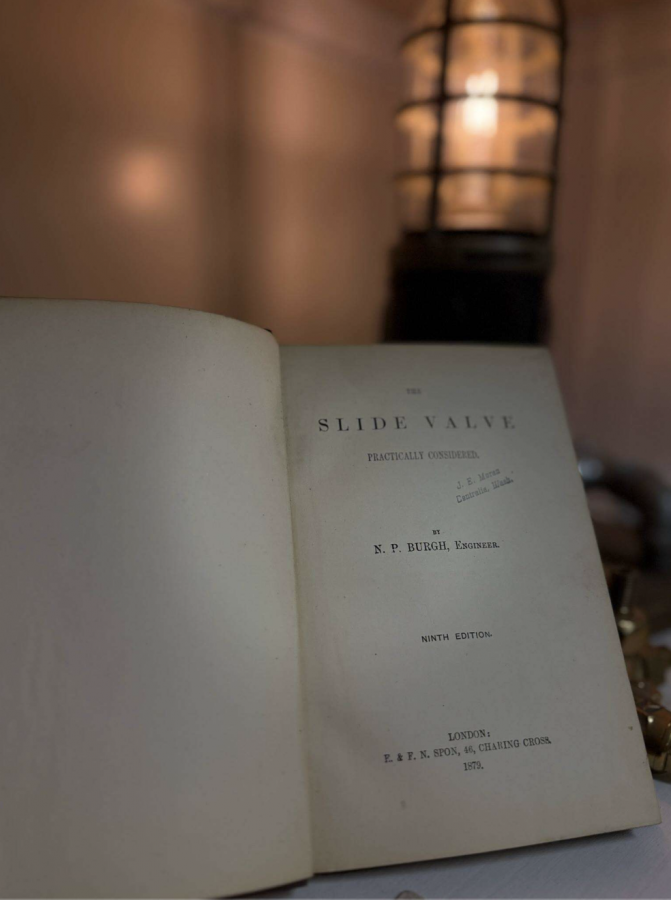
First published in 1865, The Slide Valve Practically Considered by Nicholas Procter Burgh is a technical guide to one of the most important control mechanisms used in traditional steam engines.
A slide valve regulates the movement of steam into and out of an engine’s cylinder. As the valve moves back and forth, it directs pressurized steam to alternating sides of the piston while allowing used steam to escape. This carefully timed process creates the piston’s continuous reciprocating motion, which can then be converted into the rotation needed to power machinery, vehicles, and industrial equipment.
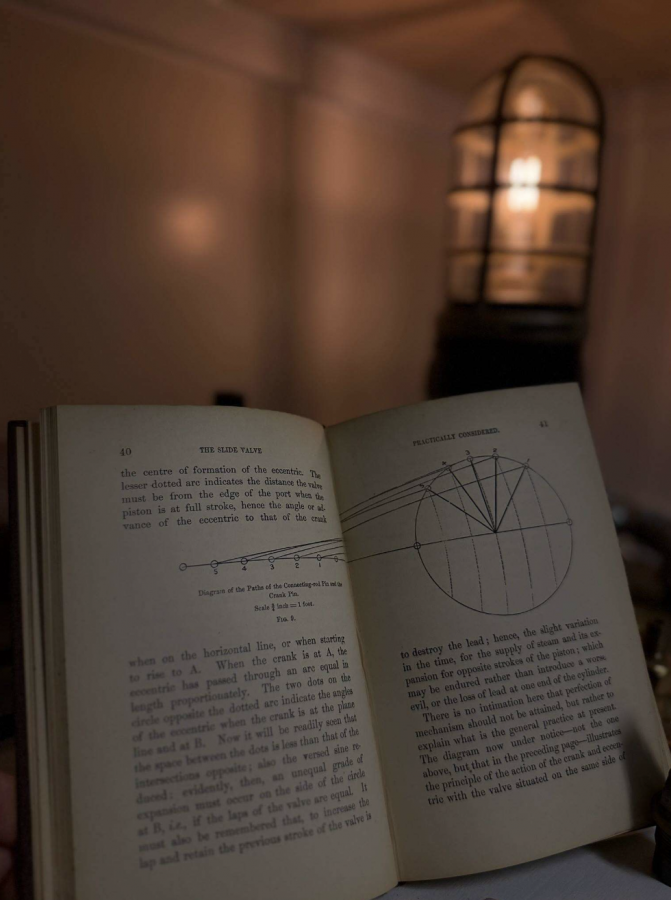
Burgh’s book examines the design, adjustment, and practical operation of slide valves. Through technical explanations and illustrations, it helped engineers understand how valve timing affected an engine’s power, efficiency, direction, and overall performance.
Displayed alongside the Steam Museum’s engines and mechanical components, this book provides a closer look at the engineering principles behind steam power. It demonstrates that the successful operation of a steam engine depended not only on producing steam, but also on controlling precisely when and where that steam was delivered.