
A Practical Treatise on the Steam Engine Indicator
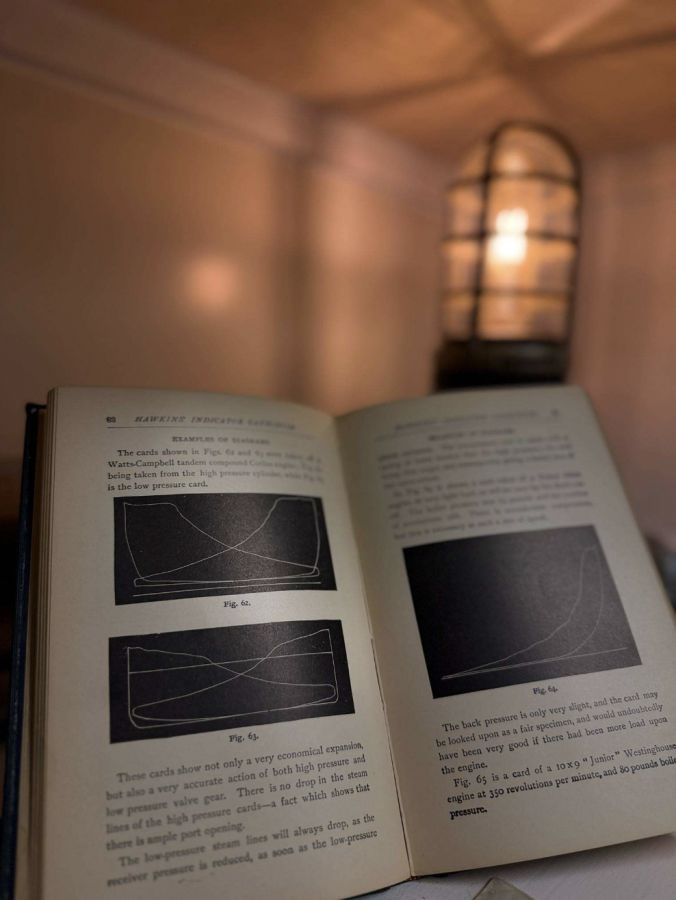
A steam-engine indicator is a precision instrument used to record the pressure inside an engine cylinder throughout each piston stroke. The instrument produces an indicator diagram—an early form of the pressure-volume, or P–V, diagram still used by engineers today.
By studying the diagram, engineers could calculate an engine’s power, evaluate its efficiency, examine steam expansion, identify improper valve timing, and detect performance problems that were not visible from the outside. This made the indicator an important tool for testing, adjusting, and maintaining stationary and marine steam engines.
The book provides practical instructions on the indicator’s construction, attachment, and operation. It also teaches readers how to interpret diagrams from different engines and compare actual performance with theoretical expectations.
Displayed in the Power Mechanical Steam Museum, this book demonstrates how engineers moved beyond simply observing a running engine. Using instruments, measurements, and diagrams, they could analyze exactly what was happening inside its cylinders and make informed improvements to its operation.
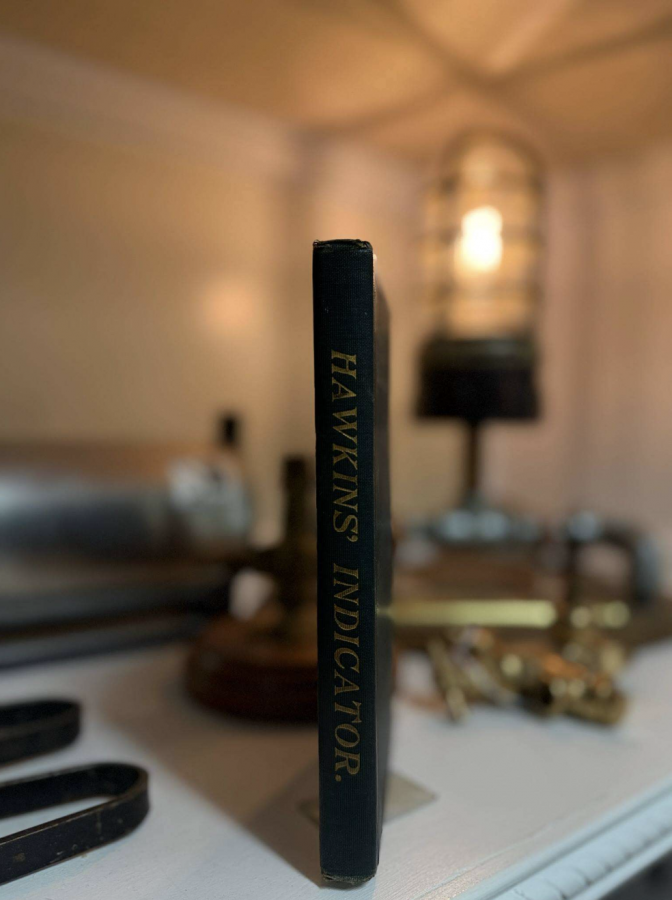
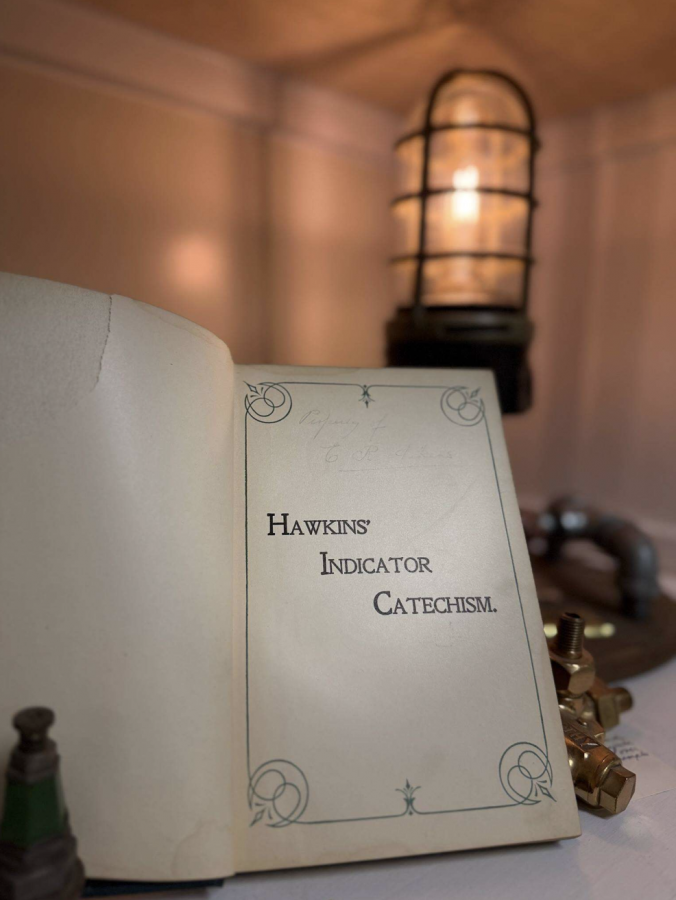
- Original author :
“Amice,” a pseudonym
- Editor:
William Worby Beaumont
- Publisher:
The Electrician Printing and Publishing Company
- Publication year:
1888
- Category:
Historic Steam Literature
- Subject:
Steam-engine indicators, indicator diagrams, horsepower, efficiency, steam expansion, and engine testing