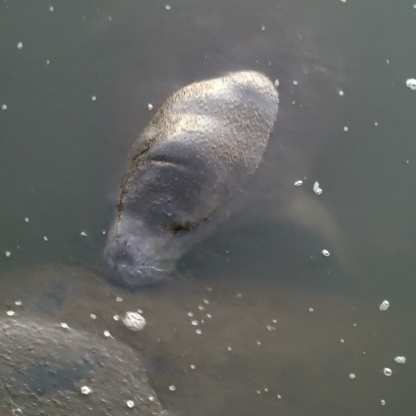
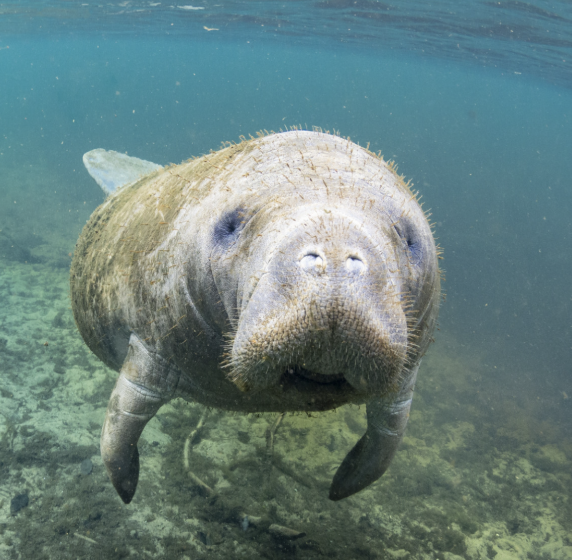
Banner promoting a manatee refuge: a large manatee gliding in turquoise water with a sunrise and a power plant in the background and overlaid title text.

A Habitat Built Around Warm Water

For decades, the waters surrounding the Cape Canaveral Power Plant served as more than just part of a power generation facility—they became an important winter refuge for Florida manatees.

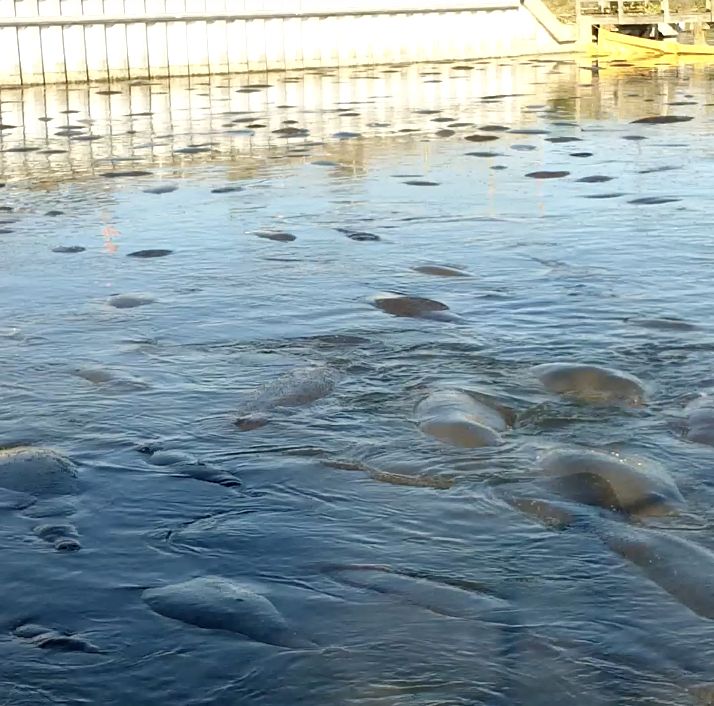
Each year, as temperatures dropped, manatees would gather near the plant’s discharge canal, where warm water was released as part of normal operations. Over time, generations of manatees returned to the same location, relying on the consistent warmth to help them survive colder weather. According to those familiar with the refuge, hundreds of manatees could gather in the area during colder months, making it one of the most significant warm-water habitats along Florida’s Space Coast.

Then came a challenge.

The aging power plant was scheduled for demolition and replacement. While the new facility would eventually take its place, the transition period created an unexpected concern. Once the original plant went offline, the warm water that the manatees had depended on for years would begin to disappear.

For the animals returning to the site, nothing had changed. They continued to migrate back to the refuge they had always known.

Without a source of warm water, however, the habitat they depended on would no longer exist.

To address the issue, a temporary heating solution was developed to maintain water temperatures while construction of the replacement facility moved forward. The goal was simple: keep the refuge warm until the new plant could take over the role the original station had played for decades.

It was a unique challenge that brought together utility infrastructure, environmental responsibility, and temporary equipment in a way few projects ever do.

And for Power Mechanical, it would become one of the most memorable applications of a rental boiler.

Crowded viewing platform along a pier overlooks a rectangular pond filled with numerous manatees.

For decades, manatees gathered near the warm-water discharge canal at the Cape Canaveral Power Plant, creating one of Florida’s most unique wildlife refuges.

Most boiler projects are designed to keep facilities operating.

Hospitals rely on steam for critical services. Manufacturers depend on heat for production. Utilities use temporary equipment to bridge outages and support construction projects.

A few years ago, however, Power Mechanical was involved in a project unlike any other.

At the former Cape Canaveral Power Plant in Cocoa, Florida, a temporary heating system was needed to support one of the state’s most iconic species: the Florida manatee.

As the existing power plant was shut down and demolished to make way for a new facility, the warm-water refuge that local manatees had depended on for decades was at risk of disappearing. To help maintain water temperatures during the transition, a temporary heating solution was installed—one that included Power Mechanical’s TB85 boiler.

What began as a construction support project quickly became something much more memorable.

When Heat Became the Mission

Keeping the refuge warm would require more than a simple heater.

As construction activities progressed at the former Cape Canaveral Power Plant, a temporary heating system was installed to help maintain water temperatures in the canal where manatees continued to gather during cooler weather.

Among the equipment supporting the project was Power Mechanical’s TB85 Mobile Boiler Plant.

The temporary system was designed to supplement Florida Power & Light’s manatee refuge warming operation during a period of unusually cold weather.

The TB85 supplied heated water to a series of plate heat exchangers, where heat was transferred to river water drawn from the surrounding waterway. The warmed water was then discharged into the refuge area while the boiler water remained within a closed loop.

Operating temperatures reached approximately 150–160°F within the heating system, helping maintain refuge temperatures between roughly 62°F and 70°F.

Connected to pumps, heat exchangers, and temporary piping, the system circulated heated water through the refuge and back through the heating loop. According to team members who worked on the project, water temperatures were maintained at approximately 100°F before being discharged through the system and returned for reheating.

While the equipment itself was impressive, the mission was what made the project unique.

Most temporary boiler installations support facilities, manufacturing processes, or utility operations. This one was helping maintain a habitat.

The system operated around the clock, creating a pocket of warm water that attracted not only manatees, but also fish and other aquatic life seeking refuge from colder temperatures.

From an engineering standpoint, the project required the same reliability, planning, and execution as any industrial installation. From a human standpoint, it offered something many projects never do—the opportunity to see the direct impact of temporary infrastructure on the natural world.

Power Mechanical’s TB85 Mobile Boiler Plant supplied heat to the temporary warming system through plate heat exchangers and pumps.

Keeping 500 Manatees Warm

The scale of the project was remarkable.

Team members on site estimated that hundreds of manatees were using the refuge during portions of the project. Some estimates suggested nearly 500 animals could be found within the area during peak periods.

For decades, these animals had relied on the warm-water discharge associated with the Cape Canaveral Power Plant.

As demolition of the aging facility moved forward and construction of a replacement plant began, maintaining suitable water temperatures became an important environmental responsibility.

Temporary barriers helped retain warmer water within the refuge while still allowing the manatees to move freely throughout the area.

During cold snaps, the heating system helped supplement the refuge’s warming capability until the replacement power station could once again provide the warm-water environment the animals had come to depend on.

“There were manatees everywhere. They were rolled over each other like they were sitting in a spa.”

A Front-Row Seat to Something Special

For the crews working on the project, the heating system was accomplishing exactly what it was designed to do. What nobody expected was just how incredible it would be to watch. As temperatures dropped, the warm-water refuge began filling with wildlife. Manatees returned to the canal just as they had for years, gathering in the heated water created by the temporary system. Team members on site described seeing dozens of manatees resting together throughout the inlet. Some floated quietly near the surface while others gathered in groups beneath the water.

“It was like they were in a spa.”

Large schools of fish could also be seen moving throughout the warmed area. Team members recalled seeing large schools of catfish gathered alongside the manatees, all taking advantage of the warmer water during the cold weather. On cooler mornings, steam would rise from the water’s surface, creating a visible reminder of the heat being delivered through the system. From the shoreline, workers could watch tails break the surface as manatees moved through the canal. Some could be seen resting side by side, while others slowly drifted through the warm water that had become a temporary refuge during the construction project. For a company whose equipment is often installed behind fences, inside mechanical rooms, or at industrial facilities, this project offered something different. The impact wasn’t measured in production output or uptime. It was visible every day in the wildlife gathering just beyond the piping and pumps. The same boiler technology that normally supports industrial operations was helping maintain an environment where one of Florida’s most recognizable species could continue returning to a habitat it had depended on for generations.

For those who were there, it became much more than another jobsite. It became a reminder that infrastructure projects can affect entire ecosystems—and that temporary solutions can play an important role in protecting them.

More Than a Boiler Project

Over the years, Power Mechanical has supported customers through emergencies, planned outages, construction projects, and some of the most demanding temporary utility challenges imaginable.

But every once in a while, a project comes along that reminds us our work reaches beyond equipment, piping, and jobsite schedules.

The Cape Canaveral manatee refuge project was one of those moments.

What began as a temporary heating solution became part of a larger effort to protect a habitat that generations of manatees had come to depend on. While construction crews worked to replace aging infrastructure, the temporary heating system helped bridge the gap, ensuring the warm-water refuge remained available during the transition.

For Power Mechanical, it was another example of what temporary utility equipment can accomplish when reliability matters most.

Sometimes that means keeping a hospital operational during an outage.

Sometimes it means supporting critical manufacturing processes.

And sometimes it means helping create a warm refuge for Florida’s gentle giants.

Years later, the project remains memorable not because of the equipment involved, but because of the purpose behind it. It serves as a reminder that engineering solutions often have impacts far beyond their original application—and that the right equipment, deployed at the right time, can make a difference in unexpected ways.

As our team watched manatees gather in the warmed waters of the refuge, it became clear that this wasn’t just another boiler project.

It was a project that connected industry, infrastructure, and environmental stewardship in a way few jobs ever do.

And that’s a story worth remembering.

Call Now Button